


Slocum Fire Admin
-
Posts
164 -
Joined
-
Last visited
Content Type
Profiles
Slocum Twp Fire News
Events
Everything posted by Slocum Fire Admin
-
Presidents' Day is observed annually on the third Monday in February to recognize the history and leadership of the American presidency. Officially designated Washington's Birthday by the federal government, the holiday originally honored George Washington, the first President of the United States, who was born on February 22, 1732. The holiday was first established for federal workers in Washington, D.C., in 1879 and expanded to all federal employees in 1885. Originally celebrated on Washington's actual birthday, its observance moved to the third Monday in February in 1971 following the Uniform Monday Holiday Act. Over time, the popular name Presidents' Day became widely associated with honoring both Washington and Abraham Lincoln, whose birthday falls on February 12, as well as recognizing the broader history of the American presidency. Today, Presidents' Day is marked by historical commemorations, educational programs, museum events, and community activities highlighting the nation's presidents and their contributions to American history. The holiday also provides an opportunity to reflect on presidential leadership, the responsibilities of public office, and the development of the United States government.
-
Valentine's Day is celebrated annually on February 14 as a day dedicated to love, affection, and appreciation for romantic partners, friends, and loved ones. The holiday takes its name from Saint Valentine, a figure associated with early Christianity, although the exact origins of the celebration remain uncertain due to conflicting historical accounts of several saints bearing that name. The holiday's association with romance developed during the Middle Ages, particularly in England and France, where literature and poetry connected the day with courtship and romantic love. By the 18th and 19th centuries, exchanging handwritten notes, flowers, and tokens of affection had become increasingly popular. The introduction of commercially produced Valentine's Day cards helped transform the occasion into the widely recognized celebration known today. Today, Valentine's Day is observed in many countries through the exchange of cards, chocolates, flowers, gifts, and expressions of affection. While traditionally associated with romantic relationships, the holiday has also become an opportunity to celebrate friendship, family, and the many forms of love and appreciation shared between people.
-
Martin Luther King Jr. Day is a federal holiday observed annually on the third Monday in January to honor the life, achievements, and legacy of Dr. Martin Luther King Jr., a prominent leader of the American Civil Rights Movement. Through his advocacy of nonviolent resistance, King played a central role in challenging racial segregation, discrimination, and inequality in the United States during the 1950s and 1960s. Born on January 15, 1929, King became internationally recognized for his leadership in events such as the Montgomery Bus Boycott, the 1963 March on Washington, and the Selma voting rights movement. His efforts contributed to major civil rights reforms, including the Civil Rights Act of 1964 and Voting Rights Act of 1965. Following his assassination in 1968, efforts to establish a national holiday in his honor continued for years. President Ronald Reagan signed the holiday into law in 1983, and it was first observed federally in 1986. Today, Martin Luther King Jr. Day serves as both a remembrance of his contributions and an opportunity to reflect on the continuing importance of equality, justice, and peaceful civic engagement. The holiday is also recognized as a National Day of Service, encouraging Americans to volunteer, strengthen their communities, and carry forward King's commitment to public service and social progress.
-
New Year's Day is celebrated annually on January 1, marking the beginning of a new calendar year in the Gregorian calendar, the most widely used civil calendar in the world. The holiday represents a time of renewal, reflection, and new beginnings, with traditions that have developed across cultures over thousands of years. The observance of January 1 as the start of the year dates back to ancient Rome, where the day was associated with Janus, the Roman god of beginnings and transitions. Julius Caesar's calendar reform established January 1 as the beginning of the year in 45 BCE. The introduction of the Gregorian calendar in 1582 helped establish the date as the international civil standard, although many cultures and religions continue to celebrate traditional new years on different dates. Today, New Year's Day is observed around the world with celebrations, family gatherings, fireworks, and traditions welcoming the year ahead. Many people also use the occasion to reflect on the past year, establish personal resolutions, and look forward to new opportunities.
-
Veterans Day is a federal holiday observed annually on November 11 to honor the service and sacrifices of military veterans who have served in the United States Armed Forces. The holiday originated as Armistice Day, commemorating the end of fighting in World War I, which took effect at the eleventh hour of the eleventh day of the eleventh month in 1918. President Woodrow Wilson first proclaimed Armistice Day in 1919, and it became a federal holiday in 1938. Following World War II and the Korean War, Congress officially renamed the observance Veterans Day in 1954 to recognize American veterans of all wars and periods of military service, rather than focusing exclusively on World War I. Today, Veterans Day is marked by ceremonies, parades, wreath-laying events, and community gatherings across the United States. The holiday serves as an opportunity to express gratitude to those who have served, recognize their contributions to the nation, and reflect on the dedication and sacrifices associated with military service.
-
Indigenous Peoples' Day is observed on the second Monday in October to honor the histories, cultures, and contributions of Indigenous peoples throughout the Americas. The observance also encourages recognition of the experiences of Native communities, including the lasting effects of European colonization, forced displacement, and efforts to preserve Indigenous identities and traditions. The modern holiday emerged from efforts to reconsider the celebration of Christopher Columbus and recognize the peoples who inhabited the Americas long before European arrival. In 1992, Berkeley, California, became one of the first U.S. cities to officially observe Indigenous Peoples' Day. Since then, numerous states, cities, and communities have adopted the holiday. In 2021, President Joe Biden issued the first presidential proclamation recognizing Indigenous Peoples' Day, although Columbus Day remains the federally designated holiday. Today, Indigenous Peoples' Day is marked by cultural celebrations, educational programs, community gatherings, and events highlighting Indigenous history, art, languages, and traditions. The observance provides an opportunity to recognize the resilience of Indigenous communities, celebrate their continuing contributions to society, and encourage greater understanding of their diverse cultures and histories.
-
Columbus Day is a federal holiday in the United States observed on the second Monday in October. It commemorates the arrival of Italian explorer Christopher Columbus in the Americas on October 12, 1492, when his expedition, sailing under the Spanish Crown, reached an island in the Caribbean. Although Columbus was not the first European to reach the Americas, his voyages helped establish sustained contact between Europe and the Americas, profoundly shaping world history. Celebrations honoring Columbus began in the United States during the 18th century, particularly among Italian American communities. In 1937, President Franklin D. Roosevelt established Columbus Day as a federal holiday, and in 1971, its observance moved to the second Monday in October. Today, Columbus Day remains a day of recognition for Italian American heritage and the historical significance of transatlantic exploration. However, the holiday has also become a subject of debate due to the devastating consequences of European colonization for Indigenous populations. Many states and communities now observe Indigenous Peoples' Day instead of, or alongside, Columbus Day, recognizing the histories, cultures, and contributions of Native peoples.
-
untilJoin us for a combined Trunk or Treat and Slocum Township Fall Fest on October 24th from 11 AM to 5 PM! This family‑friendly event brings together Halloween fun and fall activities for a full day of community celebration. Enjoy hayrides, Touch‑a‑Truck displays, food trucks, vendors, face painting, and plenty more throughout the day. Kids can trick‑or‑treat safely from decorated trunks while everyone enjoys the Fall Fest atmosphere. If you’re interested in participating as a vendor, hosting a trunk, or joining the Touch‑a‑Truck lineup, please contact Tonia at 570‑239‑1737. Activities Include: Hayrides Touch‑a‑Truck Food Trucks Vendors Face Painting Trunk or Treat And much more!
-
untilOur monthly meeting to discuss the general business of our company. New members looking to apply or the public looking for information should visit us during these meetings.
-
untilOur monthly meeting to discuss the general business of our company. New members looking to apply or the public looking for information should visit us during these meetings.
-
untilOur monthly meeting to discuss the general business of our company. New members looking to apply or the public looking for information should visit us during these meetings.
-
untilOur monthly meeting to discuss the general business of our company. New members looking to apply or the public looking for information should visit us during these meetings.
-
untilOur monthly meeting to discuss the general business of our company. New members looking to apply or the public looking for information should visit us during these meetings.
-
Christmas Day is celebrated annually on December 25 and commemorates the birth of Jesus Christ, a central figure in Christianity. While the exact date of Jesus' birth is unknown, December 25 has been observed as Christmas since at least the 4th century and has become one of the world's most widely recognized holidays. Over the centuries, Christmas traditions have expanded beyond their religious origins to include cultural customs such as decorating Christmas trees, exchanging gifts, singing carols, displaying festive lights, and gathering with family and friends. Many of these traditions developed from European holiday celebrations and have since become popular around the world. Today, Christmas is observed in many countries as both a religious and cultural holiday, celebrating themes of generosity, hope, peace, and togetherness.
-
Black Friday is observed on the Friday following Thanksgiving and marks the traditional beginning of the holiday shopping season in the United States. The term "Black Friday" became widely associated with the day during the late 20th century, referring to retailers moving "into the black," or becoming profitable, as holiday shopping accelerated. The day is known for major discounts, limited-time promotions, and early store openings, with many retailers offering some of their biggest sales of the year. In recent decades, Black Friday has expanded beyond physical stores to include online shopping and extended sales throughout the Thanksgiving weekend. Today, Black Friday remains one of the busiest shopping days of the year, with consumers taking advantage of seasonal deals while businesses prepare for the holiday gift-giving season.
-
Thanksgiving Day is a national holiday observed in the United States to give thanks for the harvest and the blessings of the past year. Its origins are commonly associated with a 1621 harvest celebration shared by the Plymouth colonists and members of the Wampanoag people in present-day Massachusetts, though modern historians recognize this event as only one part of a much broader and more complex history. Over the following centuries, various colonies and states observed their own days of thanksgiving. In 1863, during the American Civil War, President Abraham Lincoln proclaimed a national Thanksgiving Day to be celebrated each November. Congress later established the fourth Thursday in November as the official federal holiday. Today, Thanksgiving is widely celebrated with family gatherings, traditional meals, expressions of gratitude, community service, and charitable events. For many Americans, it also marks the beginning of the holiday season.
-
Halloween is celebrated each year on October 31 and traces its roots to the ancient Celtic festival of Samhain, when people believed the boundary between the living and the dead became blurred. As Christianity spread through Europe, many Samhain traditions blended with the observance of All Hallows' Eve, the evening before All Saints' Day. Over the centuries, Halloween evolved into a largely secular holiday centered on costumes, trick-or-treating, carved pumpkins, haunted attractions, and seasonal festivities. Many of today's traditions, including jack-o'-lanterns and costume-wearing, developed from European folklore and were later popularized in North America. Today, Halloween is celebrated around the world as a day of community events, creative costumes, spooky entertainment, and autumn traditions, while still reflecting elements of its centuries-old origins.
-

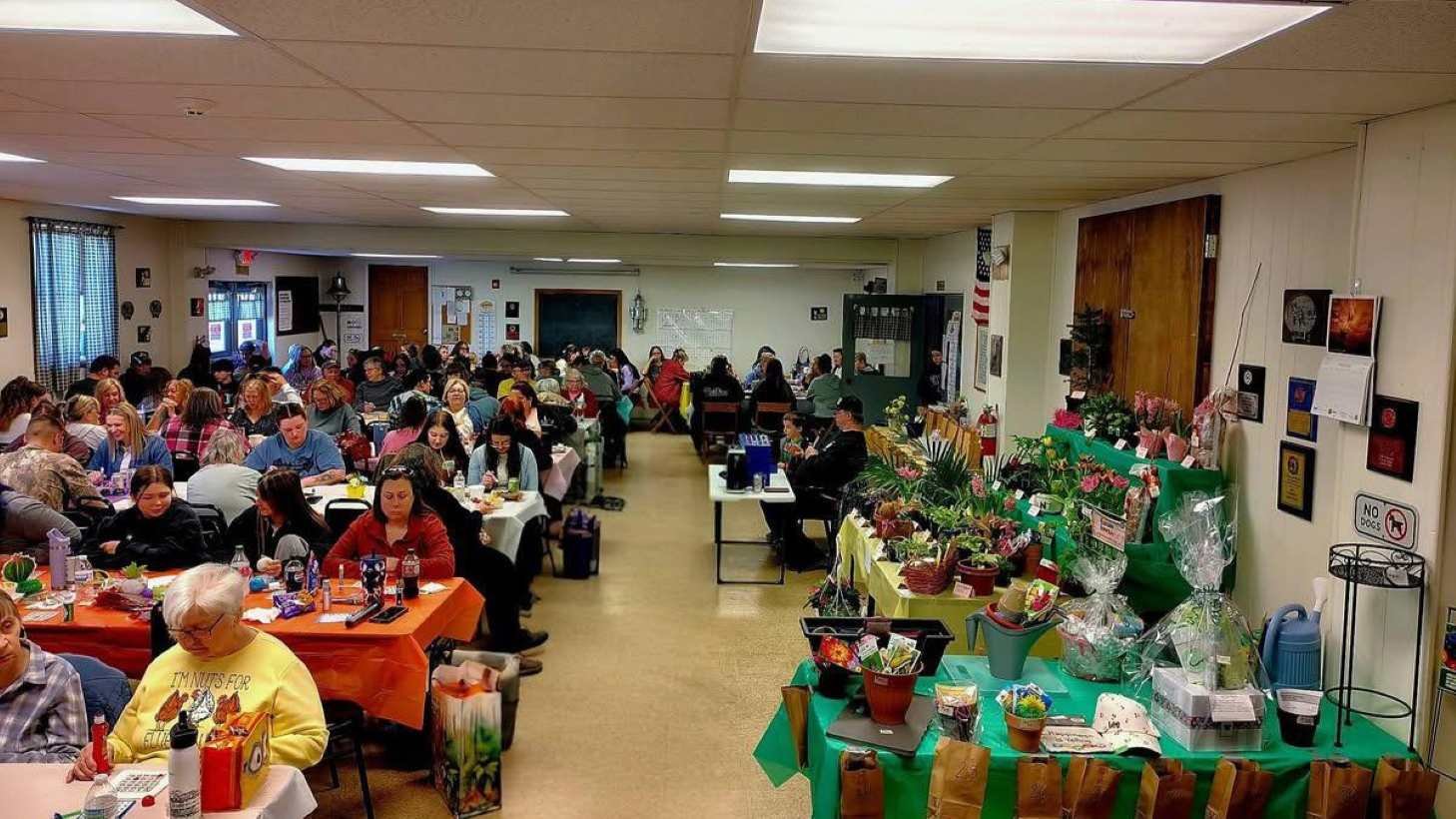 The Slocum Township Volunteer Fire Company is excited to share the success of its first‑ever Plant Bingo, held on April 12. The event brought out an enthusiastic crowd, and the support from the community exceeded all expectations. “Your support never ceases to amaze us,” and that sentiment was echoed throughout the day as residents came together to play, donate, and enjoy a fun afternoon in support of their local volunteers. Attendees described the event as a great turnout and a great time, with many already hoping it becomes a recurring tradition. The fire company extends its sincere thanks to everyone who participated, donated prizes, or helped make the event possible. Community fundraisers like Plant Bingo play an important role in supporting equipment needs, training, and day‑to‑day operations. Stay tuned for future events and opportunities to support us as we continue serving Slocum Township and the surrounding communities.
 -
untilSupport the Slocum Township Volunteer Fire Company by joining us for our Cheesesteak Sale. We’ll be offering a delicious selection of hot sandwiches, all prepared fresh and ready for pickup. Menu: Cheesesteak Chicken Cheesesteak Meatball Sub Price: $12 each Pickup Date & Time: April 25, 2026 — 1:00 PM to 4:00 PM Pre‑Order Deadline: Please place your order by April 20. How to Order: Contact Tonia at 570‑239‑1737 or message the fire company on Facebook to reserve your sandwiches.
-
untilOur monthly meeting to discuss the general business of our company. New members looking to apply or the public looking for information should visit us during these meetings.
-
untilOur monthly meeting to discuss the general business of our company. New members looking to apply or the public looking for information should visit us during these meetings.
-
untilOur monthly meeting to discuss the general business of our company. New members looking to apply or the public looking for information should visit us during these meetings.
-
Labor Day honors the contributions and achievements of American workers and the labor movement. The holiday emerged in the late 19th century during a period of rapid industrialization, when labor unions organized to advocate for safer working conditions, fair wages, and reasonable hours. The first Labor Day celebrations took place in the 1880s, featuring parades and public gatherings that recognized the role of workers in building the nation’s economy. In 1894, Labor Day was officially established as a federal holiday in the United States. Today, Labor Day serves as both a recognition of the workforce and a broader acknowledgment of the social and economic contributions of workers across industries. It also marks the unofficial end of summer, often observed with community events, travel, and time spent with family.
-
Cinco de Mayo commemorates the Mexican army’s victory over French forces at the Battle of Puebla on May 5, 1862. Led by General Ignacio Zaragoza, the outnumbered Mexican forces achieved an unexpected win against one of the world’s most powerful armies at the time. While the holiday is relatively minor in Mexico outside of Puebla, it has grown into a broader celebration of Mexican culture and heritage in the United States. Over time, it has come to include festivals, music, traditional foods, and community events. Today, Cinco de Mayo is both a historical remembrance of resilience and a cultural celebration highlighting Mexican traditions, identity, and influence.
-
April Fools’ Day is observed on April 1 as a day dedicated to lighthearted pranks, jokes, and hoaxes. While its exact origins are uncertain, the tradition is often linked to changes in calendar systems in 16th-century Europe, when some people continued celebrating the New Year in late March and early April after the Gregorian calendar shifted it to January 1. These individuals were sometimes mocked or labeled as “April fools.” Over time, the practice evolved into a widespread cultural tradition across many countries, with individuals, media outlets, and organizations participating in harmless pranks and humorous announcements. Today, April Fools’ Day is marked by playful deception and humor, with an emphasis on keeping jokes good-natured and avoiding harm or confusion.